Thread rolling for the semiconductor industry demands specialised skills and equipment. In a series of interviews, we bring together our top technical specialists in assembly, parts manufacturing, and development to promote collaboration and innovation. For the second of five expert interviews, we spoke with two of our turning and milling specialists to help you benefit from their expertise.
Richard Klomp, an expert at Hittech Bihca, specialises in thread rolling, a cold-forming process where the thread is pressed into the material rather than cut, used for high-precision semiconductor applications. It enhances fatigue strength and lowers the risk of microcracks.
Another advantage of thread rolling is that the surface can be smoother than that of cutting the tread. How do you achieve a surface roughness as smooth as the one produced by the forming process?
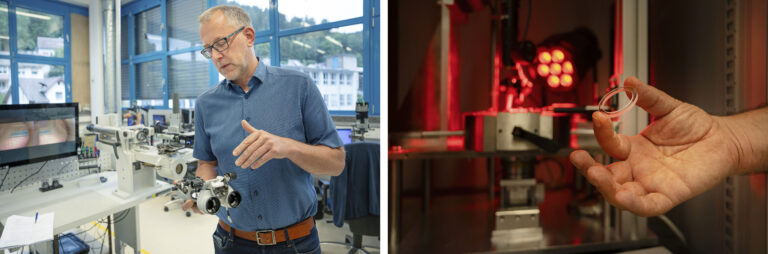
Richard Klomp: “Because it is almost impossible to measure, I use a magnifying glass to adjust the turning machine in such a way that there is no indent from the tread rollers where it shouldn’t be. Tread rolling can be done on diameters ranging from 3 mm to 40 mm. We also have the option to make Allen heads for the bolts, and we can produce them from several materials, including titanium grade 5.
We have two machines for smaller parts, one capable of achieving a 50 mm bar. The other machine has a capacity of 36 mm, including backside machining with a sub- spindle. This is not standard practice. You need to tailor your tools and staff for this, but it is essential to have both in-house, as we do. Most importantly, our success depends on our team’s curious and creative DNA. For many companies, that may be the biggest challenge.”
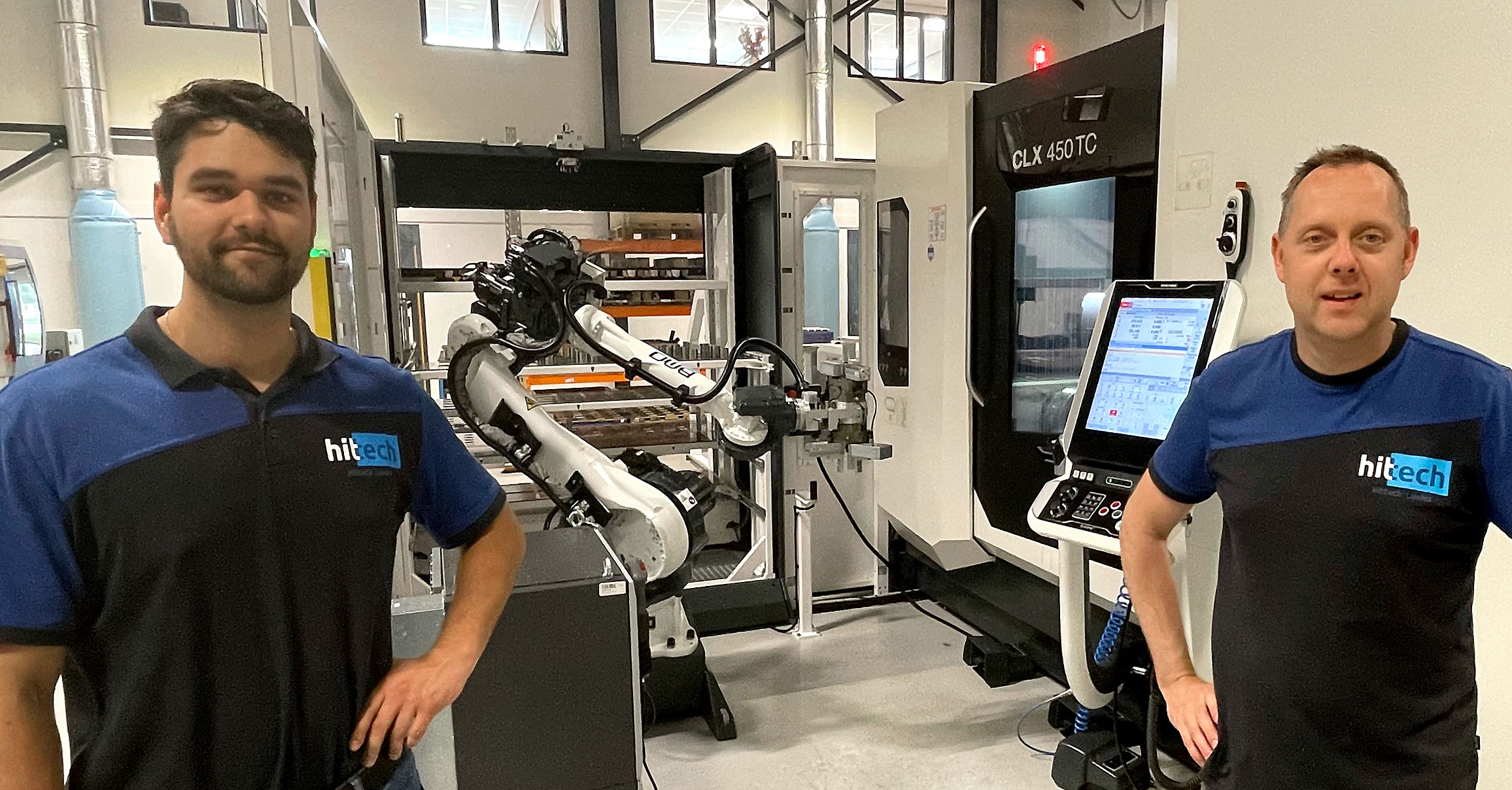
At Hittech Landes, 80% of their machines run overnight without human intervention, thanks to the automation of a BMO Automation Platinum Cell on their DMG Mori CLX 450 turn-mill machine. How do you keep human involvement relevant when working with robots?
Marco Elzing, Production Manager at Hittech Landes: “Especially when working with robots, you need a well-planned preparation, which can take up to five or six hours, to ensure they make no mistakes overnight. We work with extremely small tolerances, so the first batch of parts is always supervised by one of our team members.”
What do you see as the main advantage of working with robots in the turning and milling process?
Marco: “The fact that they can run multiple projects in one night is impressive. You must imagine that milling six different parts in a single shift places a high demand on a person’s concentration. But do not overestimate the role of robots; we still have many projects that are so precise that clamping the parts requires human supervision. The first robot here arrived about 20 years ago, and I was there when we integrated it into our process, so you could say I grew up with them professionally. I expect that in the future, planning and other preparations will become more complex and automated, and that production runs will be smaller. The industry will continue to push the technical limits and possibilities. And so do we.”
In the photo: CNC-Operator Arjen Brouwer and Marco Elzing (right) with one of the robots at Hittech Landes. We thank Paul Schut for holding this position as an interim for eight months.